Token Catalog
Versioned Material Design token data for custom components and agent-assisted development.
Visit Token Catalog (opens in new tab)
Token Catalog collects design tokens and makes them easier to browse, compare and download. Material Design 3 is the first supported collection.
The goal is fast, direct access to design data for developers and agents. Tokens, references and settings are available in readable pages and structured responses that can be inspected, crawled and fetched with ordinary HTTP clients. Source links connect the data to the original design guidance.
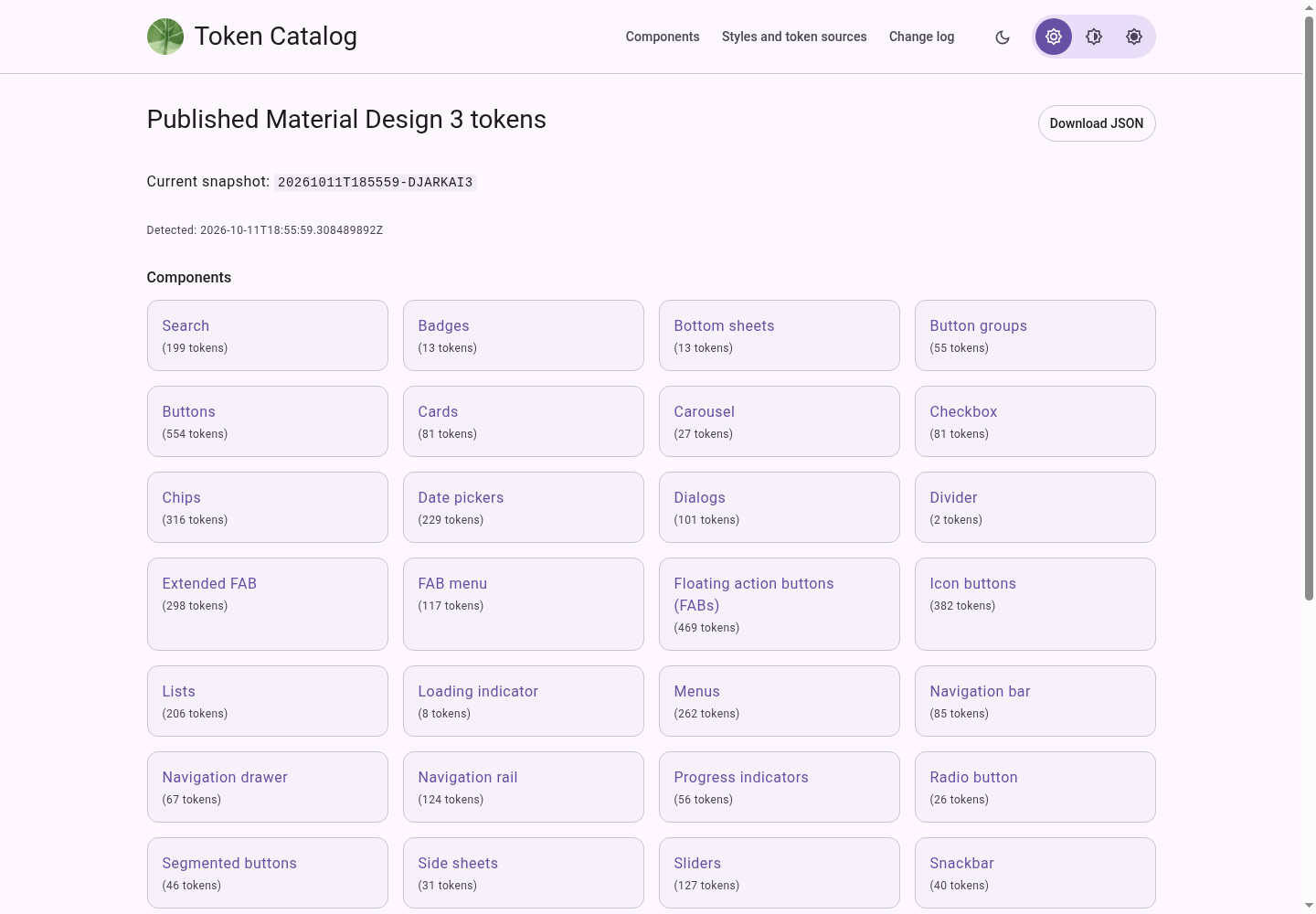
Browse and download
Find tokens by component or style, inspect their references, and filter values by platform, theme and other settings. Downloads can include the filtered table, all values in a table, a whole component, or the collection.
For example, select a Buttons table, choose a platform and theme, then download “This table, with your filters” to export that selection. Broader download options include values outside the selected table and filters.
The change log compares retained captures. It shows added, removed and changed values, including changes to individual settings. Dates record when a change was observed. Incomplete captures remain marked as partial.
The same data is available through a public JSON API, Markdown responses and read-only MCP tools. See usage and API and agent access.
Performance and access
Pages render on the server with the token data already present in the HTML. Reading pages and fetching JSON do not require JavaScript or an account. Markdown responses, OpenAPI, discovery files and MCP tools make the same data available to different clients. Small assets and deferred scripts keep the browser’s initial work limited.
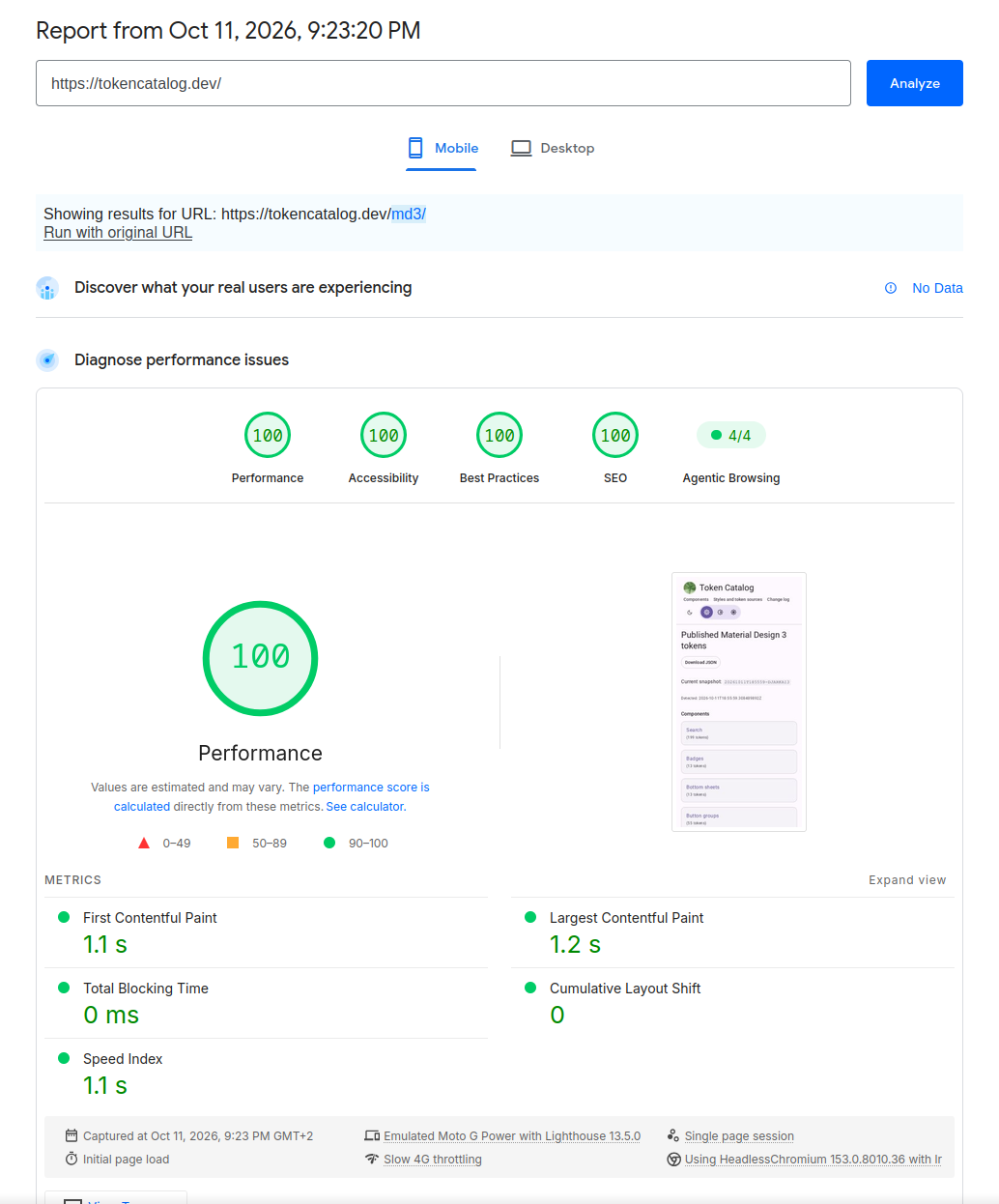
The October 11, 2026 mobile PageSpeed Insights report scores 100 for performance, accessibility, best practices and SEO, with 4/4 agentic browsing checks passed. The measured largest contentful paint is 1.2 s, with 0 ms total blocking time and no layout shift.
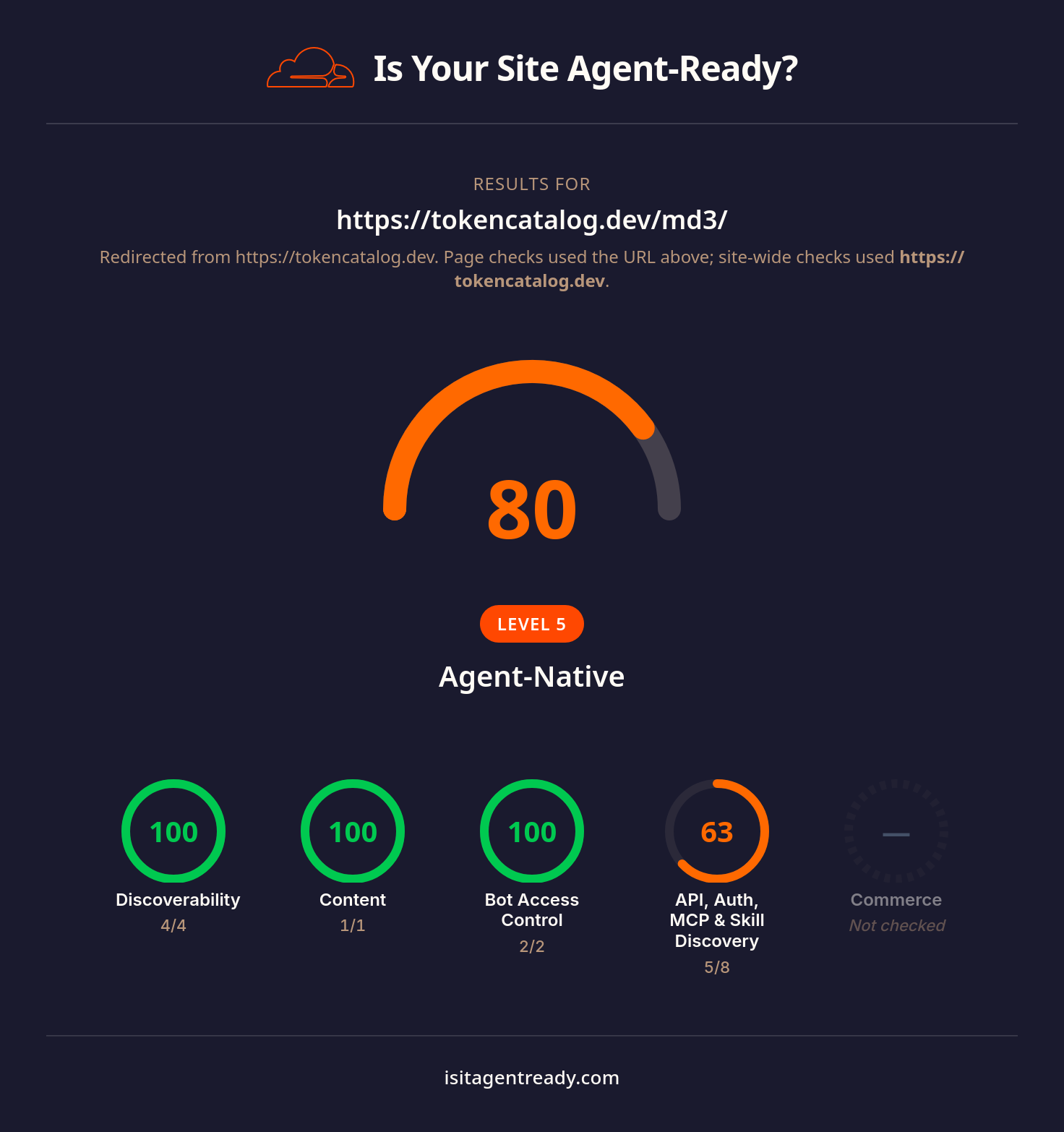
The captured Is It Agent Ready? check scores 80/100, including 100 for discoverability, content and bot access control. The remaining three checks concern OAuth/OIDC discovery, protected-resource metadata and agent registration. Token Catalog provides public, read-only access without accounts or protected APIs, so those authentication features are deliberately omitted. The lower score reflects those checks being counted as missing even though the discovery and access checks for the public service pass.
How it works
A Go pipeline opens source pages with Chromium, captures their token payloads, and saves the source URLs, coverage results and SHA-256 hashes. Each snapshot contains the captured data and the files needed to verify it later.
Publication runs offline. It compares snapshots and builds a SQLite read index and JSON downloads. The Go server renders pages with templ and HTMX, serving saved data independently of the crawler and upstream website.
The project grew out of using Material Design in a web application and needing its token values in a form that could be inspected and consumed directly. Architecture explains the pipeline and its boundaries.
Run locally
Install Go 1.26 or newer and Chrome or Chromium, then run:
go build -o ./bin/tokens ./cmd/tokens
./bin/tokens crawl
./bin/tokens snapshot create
./bin/tokens publish
./bin/tokens serve --published published --listen 127.0.0.1:8081
Open localhost:8081. The initial crawl needs network
access. Later starts only need the serve command. On Windows, build
bin/tokens.exe and use that executable for the same commands.
See development for tests and template changes, or deployment for Docker and scheduled updates.
Scope
The current crawler, extractor and publication format are specific to Material Design 3. Other design systems would need source adapters, extraction rules and their own attribution. The catalog can grow to include further collections; only Material Design 3 is implemented today.
Captures cover the reviewed source-page catalog. Upstream failures and missing payloads affect coverage. A token’s appearance or disappearance in a partial capture does not establish that its source added or removed it.
Documentation
- Using the catalog
- Developing and contributing
- Architecture
- CLI, snapshots and publication
- Deployment and recovery
- Project history
License and attribution
Project code and original documentation are licensed under MIT. Material Design 3 data comes from Google and retains its upstream terms. Bundled fonts, icons and dependencies retain their own licenses.
Token Catalog is an independent project. See third-party notices and licensing and source attribution for the distinction between the software and the data it publishes.